 0
0
 0
0
If you’ve ever ordered custom apparel and wondered why some prints look vibrant, soft, and long-lasting while others crack, fade, or feel heavy—you’re really asking about technique.
One of the most misunderstood techniques in our industry is flash drying.
Broken Arrow has artists with more than 40 years of experience in custom apparel printing, and from their expertise, I can tell you this:
Flash drying is not just a step—it’s a decision. And knowing when to use it (and when not to) is what separates an average printer from a great one.
Watch: Flash Drying Explained
Here’s a quick visual to go along with this article:
What Is Flash Drying?
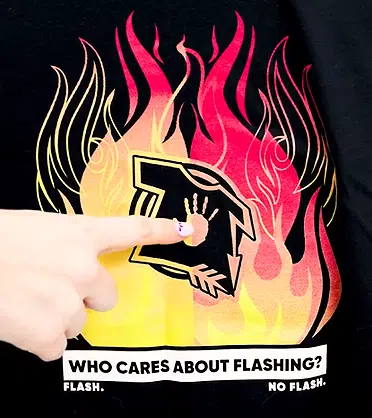
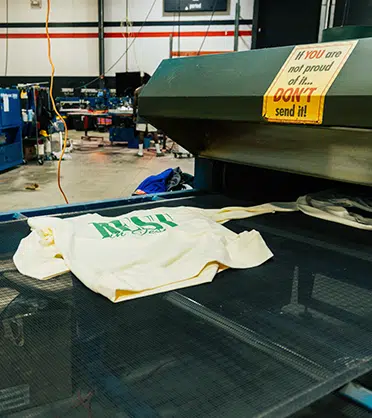
Flash drying (also called flash curing) is the process of applying short bursts of high heat to partially dry ink during the screen-printing process.
It’s important to understand this clearly:
- Flash drying is NOT full curing
- It’s meant to bring ink to a “gel” or dry-to-the-touch state
- It usually takes just a few seconds of heat
In practical terms, flash drying allows us to print multiple layers of ink without them smearing into each other.
For example:
- Print white ink
- Flash it quickly
- Then print colors on top
Without flash drying, those colors would mix, blur, or completely fail.
What Does Flash Drying Actually Do?
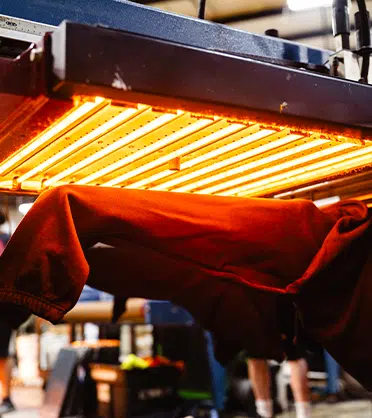
Flash drying uses a heating unit (typically infrared or quartz heat) to rapidly raise the ink’s surface temperature, so it sets just enough to continue printing.
At this stage, the ink:
- Feels dry to the touch
- Stays slightly tacky underneath
- Is stable enough for the next layer
That’s the sweet spot.
Too little heat? Ink smears.
Too much heat? You create bigger problems.
When You NEED Flash Drying
After decades in this business, I can tell you there are situations where flash drying isn’t optional—it’s essential.
1. Printing on Dark Garments
Dark shirts require a white underbase so colors pop.
That white layer must be flashed before adding colors on top. Otherwise:
- Colors look muddy
- Ink blends incorrectly
- Detail is lost
2. Multi-Color Designs
If you’re printing multiple colors, especially detailed artwork:
- Each layer must stay clean and separate
- Flash drying prevents ink pickup and smearing
3. Thick Ink Deposits
Heavy ink needs stabilization before adding more layers.
Without flash:
- Ink shifts
- Registration gets messy
- Prints become inconsistent
4. High-Volume Production
Flash drying improves:
- Speed
- Consistency
- Workflow efficiency
It keeps production moving instead of waiting for air drying.
When You DON’T Need Flash Drying
Here’s where experience really matters.
A lot of inexperienced printers overuse flash drying—and that’s a mistake.
1. Simple One-Color Prints
If you’re printing a basic design:
- No layering needed
- No need to flash
Adding it just slows production.
2. Wet-on-Wet Printing Techniques
Advanced printers can print colors without flashing in some cases.
This requires:
- Proper ink control
- Precise pressure
- Experience
But when done right, it creates softer prints and faster production. And, you can see beautiful shading and print details as shown on the shirt in this short YouTube flash drying video.
3. When It Hurts the Final Feel
Too much flashing can:
- Make prints feel stiff
- Build unnecessary thickness
- Reduce softness
And customers notice that.
The Biggest Mistake: Confusing Flash Drying with Full Cure
This is where shops get into trouble.
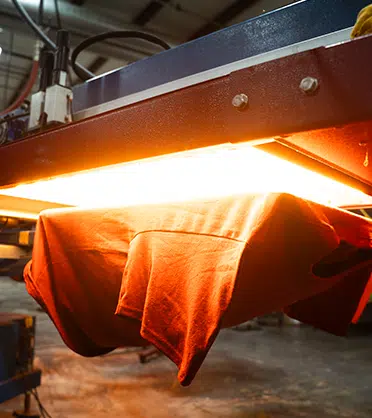
Flash drying: ~180–250°F surface temp
Full cure: ~320°F throughout the ink layer
If a garment leaves the shop only flash-dried:
- It will crack
- It will peel
- It will wash out
I’ve seen it happen too many times.
Why Experience Matters More Than Equipment
Here’s the truth most people won’t tell you:
Anyone can buy a flash dryer.
Not everyone knows how to use it correctly.
Flash drying depends on:
- Ink type
- Fabric type
- Room temperature
- Humidity
- Ink thickness
- Timing and distance
All these variables change daily.
After multiple decades in this business, I don’t just “flash” a print—I read it.
I know:
- When it needs more heat
- When it needs less
- When to skip it entirely
That judgment is what delivers consistent, high-quality results.
What Customers Actually Want (And Why Flash Drying Matters)
Customers don’t ask for “flash drying.”
They ask for:
- Soft prints
- Bright colors
- Long-lasting designs
- Comfortable apparel
Flash drying is just one tool we use to get there.
Used correctly, it helps achieve:
- Clean color separation
- Sharp detail
- Durable prints
Used incorrectly, it leads to:
- Heavy prints
- Cracking
- Fading
- Customer complaints
Why You Need a Custom Apparel Printer Who Knows When to Use It
Choosing the right printer isn’t about equipment—it’s about judgment.
A skilled printer knows:
- When to flash
- When not to
- How to balance speed and quality
Because every job is different.
The same technique that works for:
- A 1-color logo
…won’t work for: - A 6-color detailed graphic
That’s why experience matters more than anything.
Customer Q&A
Q: Why does my print feel thick or heavy?
A: It’s often due to over-flashing or too many ink layers. A skilled printer minimizes both to keep prints soft
Q: Can flash drying damage garments?
A: Yes—if overdone. Too much heat can scorch fabric or affect synthetic materials.
Q: Why did my print crack after washing?
A: It likely wasn’t fully cured. Flash drying alone isn’t enough for durability.
Q: Do all prints require flash drying?
A: No. Many simple prints don’t need it at all. It depends on the design and fabric.
Q: Is faster printing always better?
A: No. Rushing without proper technique leads to poor results. The goal is consistency, not just speed.
Final Thoughts from Paul Leto
Flash drying is one of those things that looks simple—but isn’t.
It’s a tool.
Not a shortcut.
Not a cure-all.
After multiple decades in this industry, I’ve learned that the best results come from understanding outcomes—not just the equipment.
We know at the end of the day, the customer doesn’t care how we print it.
They care how it feels, how it looks, and how long it lasts.
And that’s where experience makes all the difference.


Average Rating