 0
0
 1
1
Ever since we moved into our bigger production facility in 2023, I’ve had this vision of getting robots.
Not just because it sounds cool, but because everything got… bigger. The number of steps employees take to get from department to department increased. The distance goods have to travel increased. And with that, the inefficiencies became a lot more obvious.
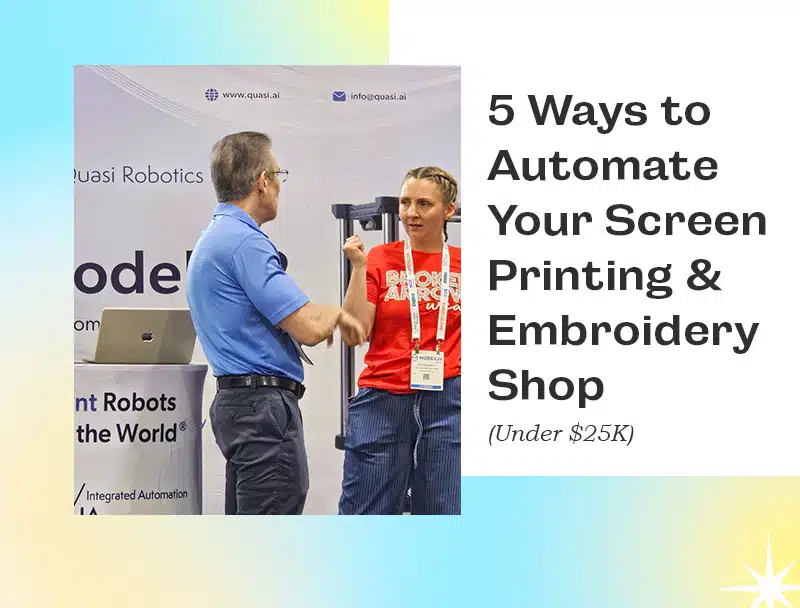
Robotics is a completely new world for Paul and me, but over the last few years, we’ve been trying to learn as much as we can. This year, we decided to stop just reading about it—and actually go see it for ourselves. We attended Modex, a massive automation trade show focused on warehouse and production systems.
And after walking through the show, one thing became very clear. A lot of automation is cool, but it can also be expensive. But buried in all of these million-dollar systems were a few less expensive options that seemed a little bit more affordable for small and medium sizes businesses.
Here is my takeaway of 5 ways you can automate your production facility today without spending a crap ton of money.
1. Automated Rollers
We currently don’t have automated rollers in our production facility, which means people are constantly having to walk products forward as they move through the line.
The place this shows up the most for us is in shipping. Our shipping team will process a few boxes at the computer… then have to stop, walk them forward… come back, ship a few more… and repeat that cycle over and over.
Does each trip take a ton of time? Not really. But over the course of a day, and especially over a year, it adds up. Not just in time, but in extra movement and fatigue.
Automated rollers solve that by continuously moving products forward without needing someone to stop what they’re doing.
They’re not cheap, typically around $500 per linear foot, but they don’t have to be installed everywhere. Even adding them in key areas (like shipping) can remove a lot of unnecessary steps and keep things flowing more consistently.
2. A Dimensional Scale That Integrates with ShipStation
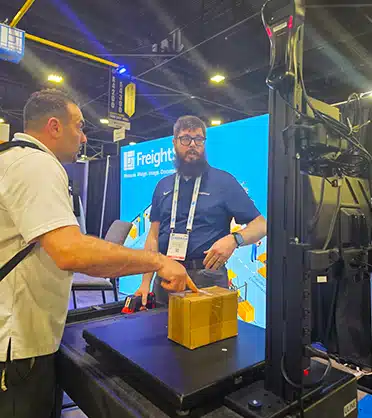
Speaking of shipping, you can get a dimensional scale that not only weighs your packages but also measures the box size at the same time. When it’s integrated with a platform like ShipStation (brands like Cubiscan do this), that data gets sent automatically, no manual entry is needed.
That means no more pulling out a tape measure, no more guessing dimensions, and a lot less room for error. It saves time, but just as importantly, it improves accuracy. And when it comes to shipping costs, accuracy matters.
These systems typically run around $7,500, which isn’t nothing. But when you pair it with something like automated rollers, the efficiency gains start to stack.
For us, those two changes alone could realistically reduce the time someone spends on shipping by 1–2 hours per day.
3. Automatic Pallet Wrapper
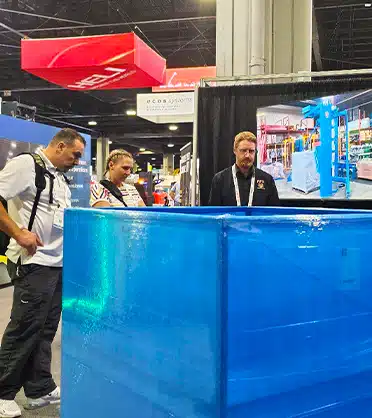
With the volume of boxes we ship daily, UPS requires us to palletize and wrap outgoing shipments for pickup. Right now, we do all of that by hand, which is a bit of a pain.
It’s time-consuming, inconsistent, and uses more plastic than you’d think. When you wrap by hand, you can’t stretch the film nearly as efficiently as a machine can, so you end up using more material than necessary.
Automatic pallet wrappers solve that.
There are two main types:
- Turntable style – you bring the pallet to the machine, set it down, and it spins while wrapping
- Mobile style – the machine moves around the pallet and wraps it in place
The turntable option is typically more affordable, but if pallet weight matters for your shipments, you may still need to use a forklift scale before wrapping which adds an extra step.
Pricing can range anywhere from around $4,500 up to $25K+ depending on the type and features.
The biggest advantage? Once it starts, the operator can walk away and do something else. You’re no longer tying someone up just to stand there and wrap pallets. And over time, you’ll also reduce plastic usage thanks to the machine’s ability to stretch the film more efficiently, which is a nice bonus.
4. Autonomous Sweeper
This one is simple; you can basically get a giant Roomba for your shop.
These autonomous sweepers can handle things like pallet scraps, dust, and general debris, keeping your floors consistently clean without someone having to push a broom around.
That said, it’s not a perfect fit for every area. In screen printing, for example, we’d be a little hesitant. The last thing we want is a machine spreading ink around if it runs through the wrong spot.
But in areas like embroidery, shipping, fulfillment, and even break rooms, it makes a lot more sense.
A clean shop is just a better place to work. If you can run something like this after hours, you’re walking into a clean facility every morning, without having to dedicate labor to it.
Most of these machines range from around $12K to $30K+, depending on size and features.
5. Autonomous Utility Carts
I’ll be honest—this is one I want just because it would be cool to watch a cart driving around the shop. But it does actually have some practical use.
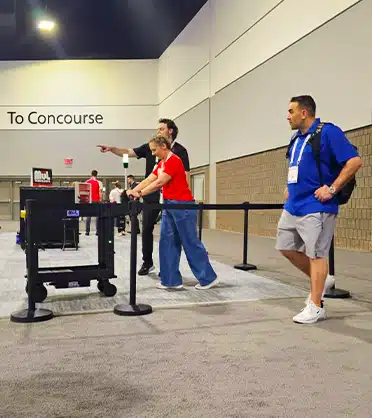
These carts can be programmed with different stopping points throughout your facility. You assign each location a number, press a button, and the cart drives there.
They’re not huge, so it’s not like you’re moving full production loads across the building. But for smaller, repetitive tasks, they could be helpful.
Things like:
- Sending a defective item back to inventory
- Moving supplies (like thread) out to embroidery
- Transferring small batches between departments
I’m not sure this is one that creates massive time savings on its own. But it’s also not always about that. There’s something to be said for making your team comfortable with automation. You can show them that automation can support what they are doing to make their jobs easier, they are not just there to replace them.
And honestly, if it makes the shop a little more fun and a little more efficient at the same time, that’s not a bad combination.
Cool… But Not That Cool (For the Price)
Here are some things we’d love to implement in the future—but only if the cost comes down significantly.
- Automated box sealer
We’d need one that can handle multiple box sizes, which quickly drives the price up. Most of the systems that would work for us start around $125K or more. - Automated box opener
Same challenge as the sealer, multiple box sizes. These systems rely on “recipes” for each size, which doesn’t really fit the unpredictability of our orders. Hard to justify at $150K+. - Full conveyor system throughout the shop
Extremely efficient in the right environment, but for our setup, this would likely run into the millions. Just not a justifiable return. - AMRs (Autonomous Mobile Robots)
We’d love to have robots moving goods around the shop, but the costs add up fast—often a $150K+ setup fee, plus $30K–$75K per robot, and ongoing software licensing. Tough to make the numbers work. - Autonomous sweeper + scrubber combo
Basic sweeping is one thing, but if you want full floor scrubbing capabilities, you’re getting closer to $100K. At that point, we can do a lot of cleaning for the same cost.
Final Thoughts on Automation (For Now)
One thing that surprised me the most was just how expensive automation still is and how little it is truly AI-driven. In a lot of ways, it feels like the industry is a bit behind. For most small to mid-sized shops, a lot of these solutions just aren’t realistic yet.
That said, I don’t think it stays that way forever. As tools like ChatGPT and Claude continue to evolve, there’s a real possibility that non-programmers like us will be able to build, customize, and control automation in ways that just aren’t possible today.
And when that happens—we’ll be first in line. Until then, we’ll stick with the more practical, affordable upgrades and keep looking for ways to get more efficient without overcomplicating things.